
Welcome of Participants
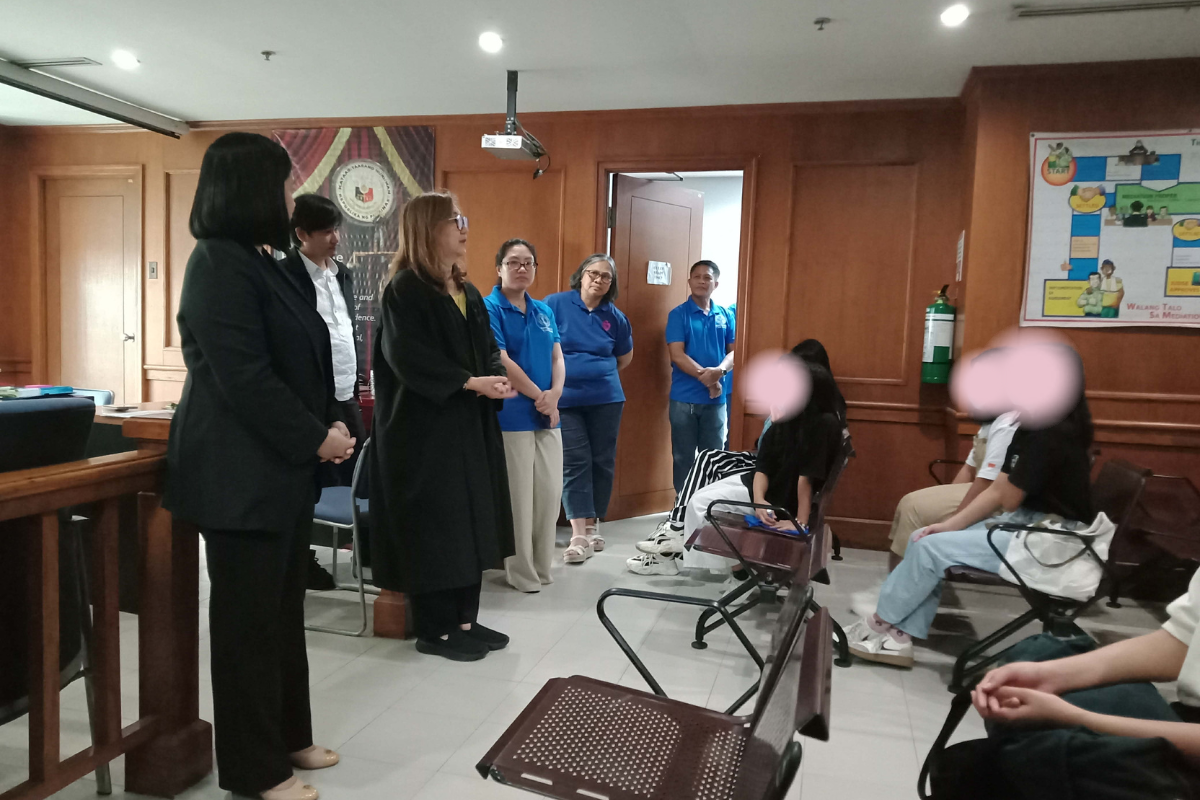
On 11 July 2025, at 9:00 a.m., Hon. Liza Marie Raagas Picardal-Tecson warmly welcomed the representatives of the Justice Cecilia Muñoz-Palma Foundation, Inc. (JCMPF), together with the participating children and accompanying social workers from Voice of the Free Foundation, Inc. and CPTCSA. The Honorable Judge expressed her appreciation for the collaboration and emphasized the importance of preparing children—particularly those involved in abuse-related cases—for their meaningful and confident participation in court proceedings.
Understanding Court Proceedings: Roles of Key Court Officers
During the session, the children were introduced to the respective roles of the Judge, the Prosecutor (Fiscal), and the Public Attorney, underscoring how each contributes to the administration of justice.
The court process begins when a complaint is filed. At this stage, the primary objective of the proceedings is to ascertain the truth. The accused is afforded the constitutional right to defend themselves, including the presentation of evidence to refute the allegations or clarify the circumstances surrounding the complaint.
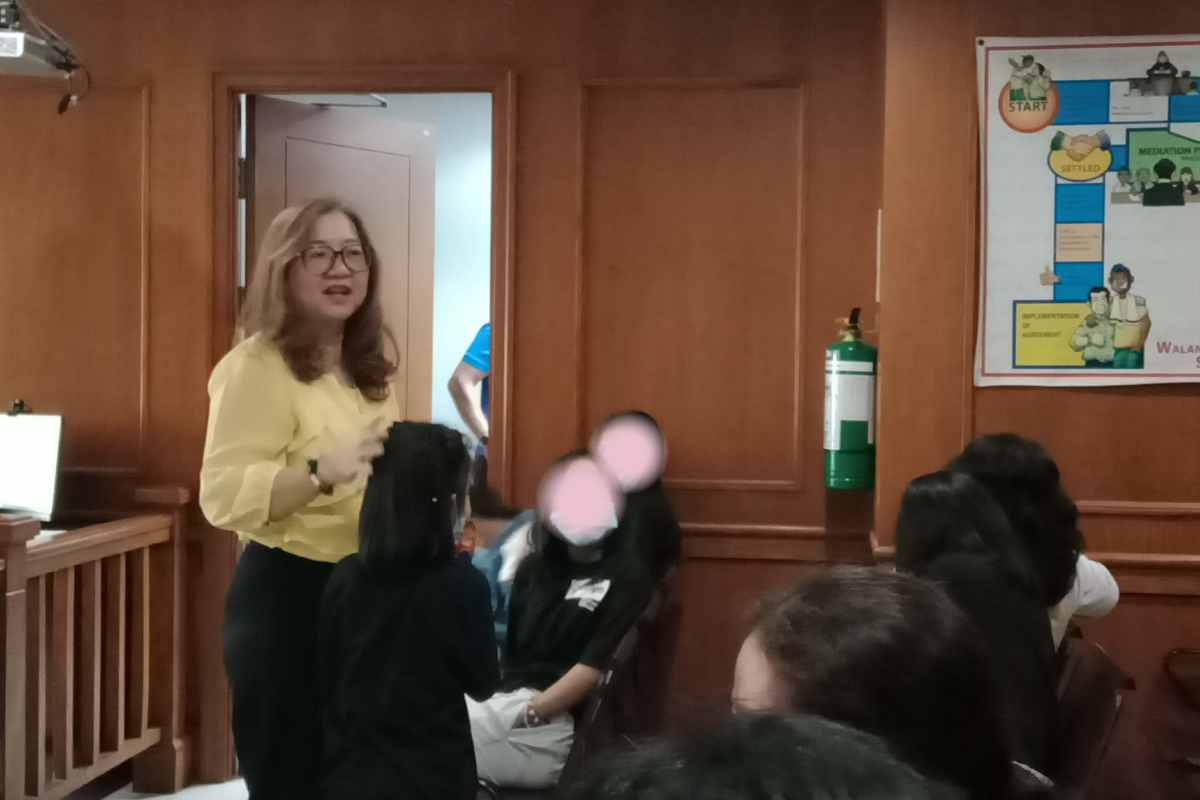
The Public Attorney’s Office (PAO), represented during the session by Atty. Fides C. Victorio, explained its mandate to safeguard the rights of the accused. The PAO ensures that the accused fully understands the charges filed and that due process is observed throughout the proceedings. This may involve establishing innocence or, when appropriate, negotiating a plea bargain that may mitigate the penalty.
In contrast, the Office of the Prosecutor, represented by Atty. Frances Dyan T. Lim-Borja, represents the State. The Prosecutor is tasked with presenting evidence against the accused and pursuing justice on behalf of the complainant, while ensuring that the child witness is treated with care and sensitivity.
The Kids and Teens Court Awareness Program (KTCAP)
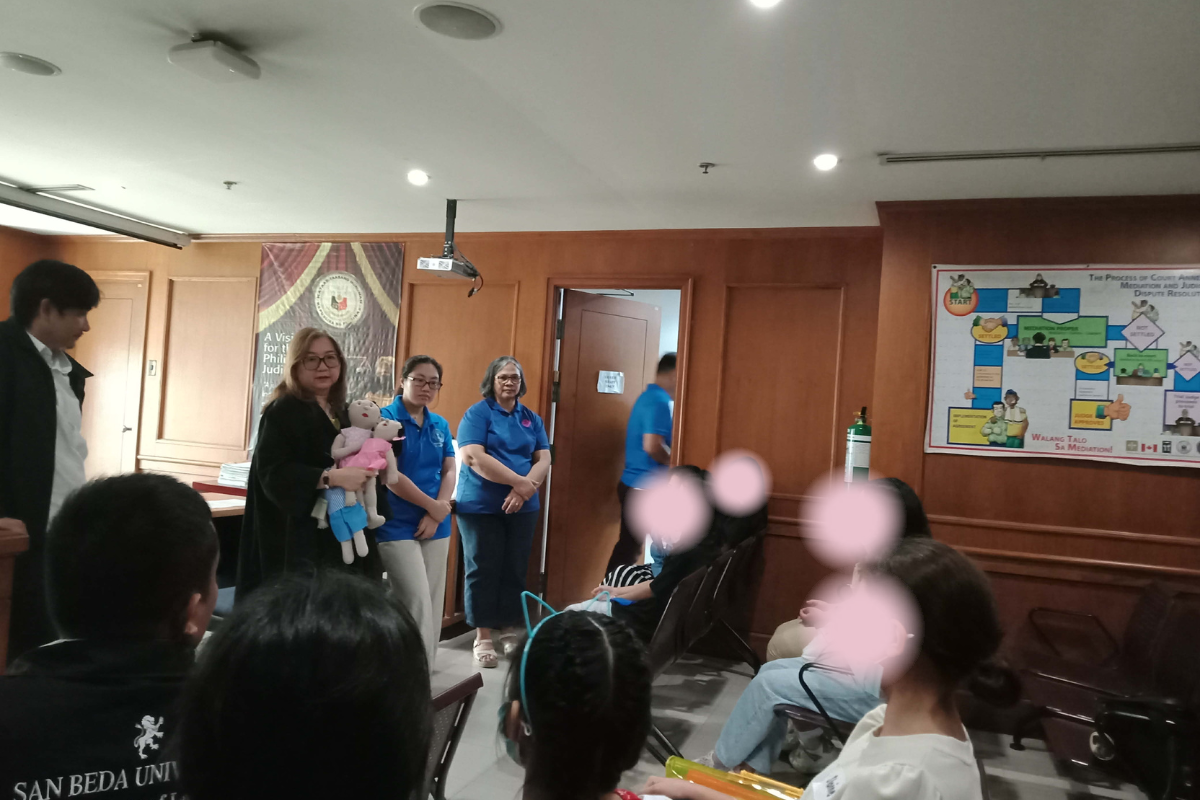
Under the Kids and Teens Court Awareness Program (KTCAP), the presiding judge engages directly with child participants to help ensure that their rights are protected and that their voices are heard within the justice system. The program seeks to strike a balance between the demands of a fair trial and the need to provide guidance, reassurance, and emotional support to children, particularly those who have experienced abuse.
In many court proceedings, the accused is physically present during hearings. For child witnesses, especially those who have suffered abuse, the prospect of seeing the alleged perpetrator can be intimidating or distressing. To illustrate this reality, the Prosecutor shared a case example involving the physical abuse of a six-year-old child.
The child had been playing in a playground while holding a pigeon. When the pigeon flew away, the child chased it until it entered the accused’s house. Finding the door partially open, the child went inside to retrieve the pigeon. When the accused awoke, he grabbed the child and dragged him outside. The child cried until someone came to his rescue, after which the accused was charged.
When asked in court, “Can you tell me what happened?” the child was able to narrate the incident clearly and demonstrate an understanding that he had been harmed. When asked whether he was afraid to go to court, the child replied that he was not and expressed his willingness to testify with the support of his mother.
Support for Child Witnesses
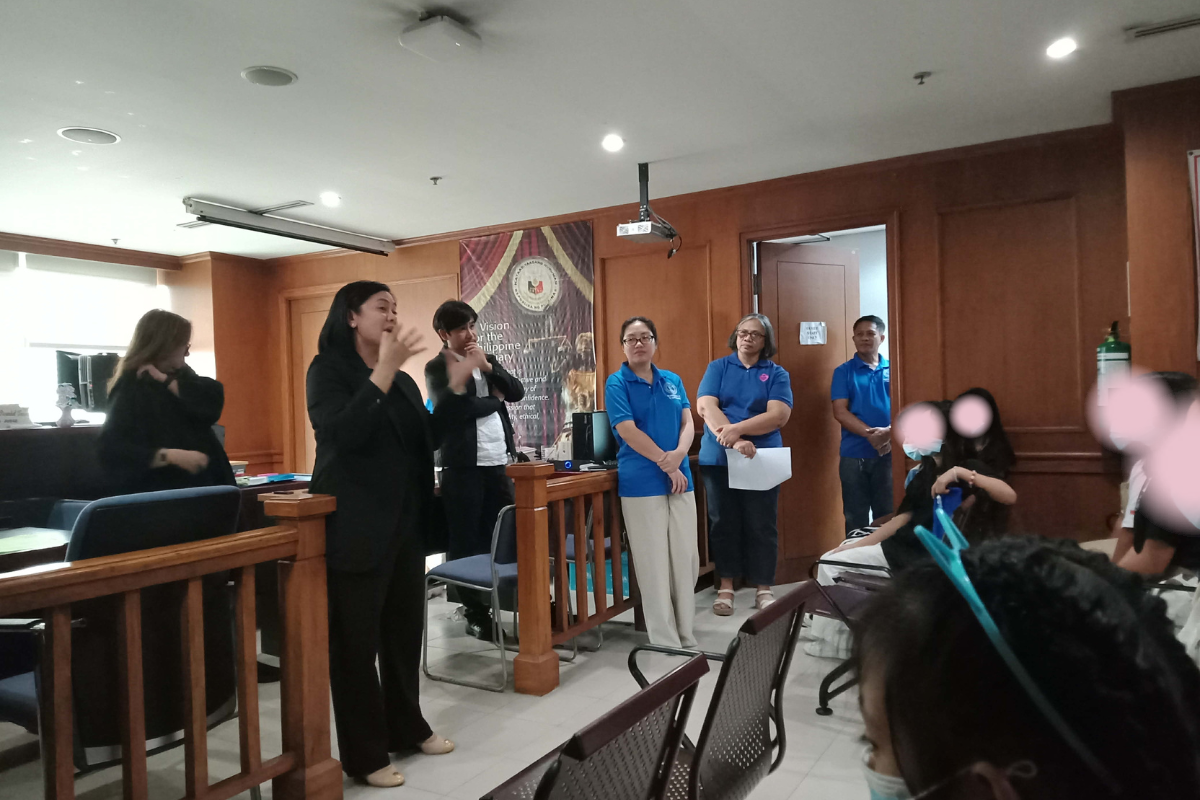
In cases where children are abused by parents, relatives, or other individuals, they may be required to testify in court. To ensure their protection and well-being, children are provided with the assistance of social workers throughout the legal process. Importantly, child witnesses are not coached on what to say; rather, they are encouraged to speak truthfully, freely, and at their own pace.
Guidance Provided to Child Witnesses
Fiscal Frances Dyan offered reassuring guidance to the children:
“When you testify, it’s natural to feel nervous. Just tell the truth about what happened. If you feel uncomfortable or forget something, it’s okay to say you don’t remember. I will guide you through the questions.”
The Judge affirmed this child-sensitive approach, noting that leading questions are permitted when examining child witnesses, unlike in the examination of adult witnesses. This practice is intended to help children feel more at ease while ensuring that accurate and reliable testimony is obtained.
The Fiscal further reassured the children:
“Just say what you remember, and I will help you with the answers. Don’t feel pressured to say something that is not true. You may bring a security blanket if it helps you feel better.”
Role of the Public Attorney’s Office
The Public Attorney’s Office reiterated its commitment to upholding due process and safeguarding the rights of the accused. This includes careful review of case records, competent legal representation, and ensuring that all information presented in court is truthful and accurate, as misleading statements may significantly affect the outcome of a case.
Case Conference and Child Preparation
Prior to court hearings, a case conference is typically conducted with the Prosecutor to discuss case details and identify the specific needs of child witnesses. This preparatory process includes assessing the child’s comfort level, addressing fears related to the accused or legal counsel, and determining appropriate questioning strategies during hearings.
The overarching goal of these efforts is to ensure a fair trial while safeguarding the rights, dignity, and well-being of all parties involved, especially the child.
Feedback from Children
“Alam ko na kung ano ang mangyayari sa korte. Pinaka-nagustuhan ko ay nakilala ko ang Piskal.”
— Female, 13 years old
“Ang natutunan ko sa korte ay magsabi ng totoo, at kung magkamali man ako, magsasabi ako kay Judge. Nakilala ko rin ang abogado.”
— Female, 11 years old
“Huwag matakot dahil karapatan naming mga bata iyon. Pinakanagustuhan ko ay nagpakilala ang mga Judge at ang pinakitang doll.”
— Female, 11 years old
“Akala ko ang defense lawyer ay kalaban ko. Trabaho lang pala nila ang ipagtanggol ang akusado. Nagustuhan ko ang paliwanag kung ano ang mga dapat gawin sa loob ng korte.”
— Female, 15 years old
“Masaya po ako. Nabawasan ang takot at kaba, pero hindi ko pa kayang ikuwento ang nangyari sa akin. Pinakanagustuhan ko ang pagkain ng Jollibee.”
— Female, 6 years old
Feedback from the Social Worker
“I learned about the roles and responsibilities of the Judge, Fiscal, and Lawyer in court, and how cases involving minors are handled. At first, I was afraid that victims might not be able to tell everything, but I felt reassured after understanding the process.”
— Ms. Abegail Shaine R. Geronimo, RSW
Social Worker, Voice of the Free Foundation, Inc.
About KTCAP
“The Kids and Teens Court Awareness Program (KTCAP) is a collaborative initiative designed to empower child and teen victims or witnesses of abuse and exploitation. Its goal is to prepare them for court appearances while easing the fear, anxiety, and uncertainty often associated with legal proceedings. Inspired by the King County Kids’ Court in Seattle and thoughtfully adapted for the Philippine context, KTCAP helps young participants understand the justice system, their role in it, and how to navigate courtroom processes with confidence and clarity.
The Justice Cecilia Muñoz Palma Foundation (JCMPF), in collaboration with the Center for the Prevention and Treatment of Child Sexual Abuse (CPTCSA) and Action Against Violence and Exploitation, conducts the Kids and Teens Court Awareness Program (KTCAP).
Every child has the right to be heard. KTCAP is helping make that possible—one empowered child at a time.”